
How to Measure Jewelry Size: Complete Guide for Rings, Bracelets, and Necklaces
When purchasing jewelry online, choosing the right size is just as important as selecting the design and gemstone.
A beautiful ring may feel uncomfortable if it is too tight or too loose. A bracelet may easily slip off if the size is incorrect, while a necklace with the wrong length may not achieve the desired styling effect.
Many customers experience sizing issues because they estimate measurements based only on appearance or previous wearing experience.
This guide provides simple and practical methods to measure ring size, bracelet size, and necklace length accurately at home.
Ring Size Guide: How to Measure Your Ring Size Correctly
Measure Your Finger at the Right Time
The most important rule when measuring ring size is choosing the correct measuring time.
Finger size can slightly change throughout the day due to temperature and natural swelling. For the most accurate result, it is recommended to measure your finger in the evening when your fingers are closest to their normal daily size.
Avoid measuring:
Immediately after waking up
When your hands are cold
After intense exercise
These conditions may cause inaccurate measurements.
Step-by-Step Ring Size Measurement Method
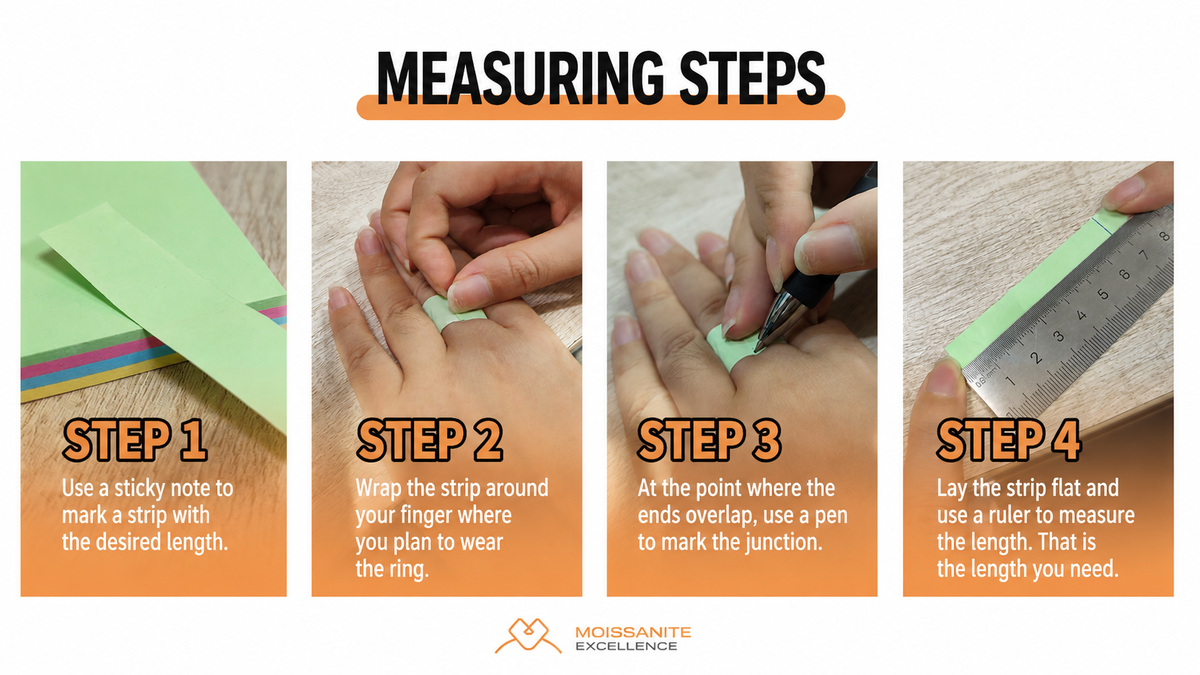
You can measure your ring size using simple items at home:
Required tools:
- A non-stretch paper strip
- Soft thread
- Thin measuring tape
Steps:
- Wrap the paper strip or thread around the widest part of your finger.
- Make sure it fits comfortably without squeezing the skin.
- Mark the point where the two ends meet.
- Lay the strip flat and measure the length.
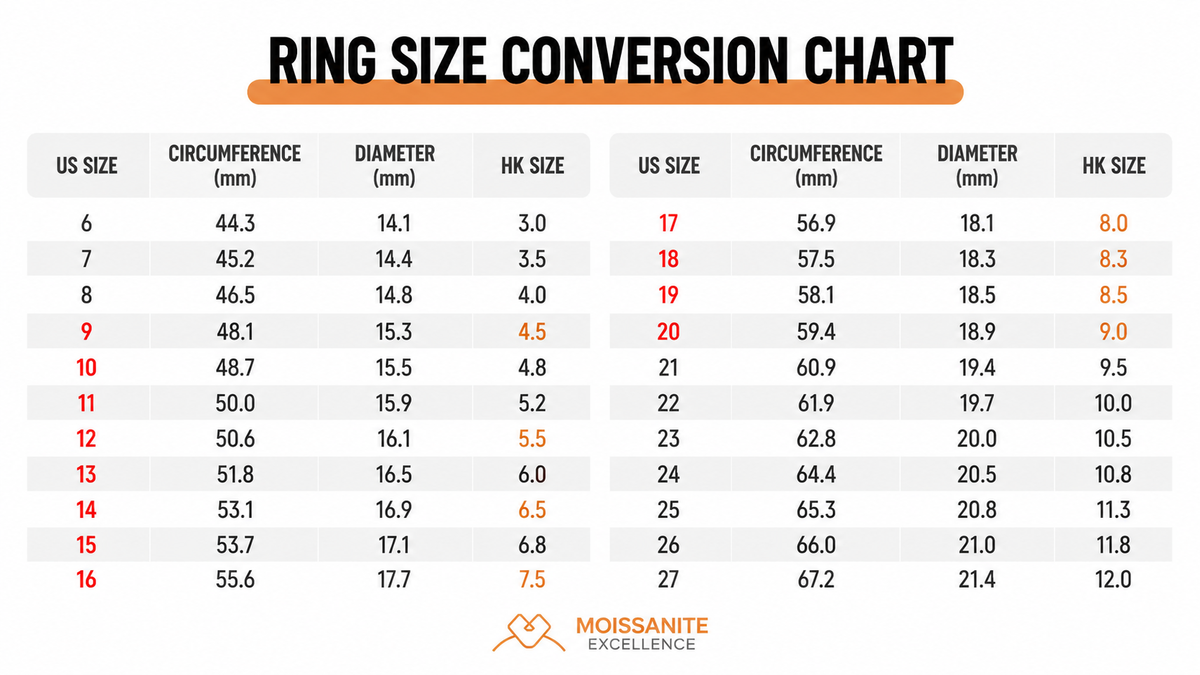
- Compare the measurement with a ring size chart.
For international jewelry purchases, remember that different countries use different sizing systems, such as:
- US ring size
- UK ring size
- Hong Kong ring size
- European ring size
- Always confirm the correct conversion chart with your jewelry supplier before placing an order.
Ring Size Tips You Should Know
Consider Your Knuckle Size
If your finger joints are larger than the base of your finger, measure both:
- Finger base circumference
- Knuckle circumference
Choose the larger measurement to ensure the ring can pass comfortably over the joint.
Wider Rings Usually Require a Larger Size
Wide-band rings create more contact with the finger and may feel tighter than thin rings.
For wider designs, it is usually recommended to choose approximately half a size larger for better comfort.
Avoid Measuring in Cold Weather
Cold temperatures can make fingers temporarily smaller.
Choosing a ring size during cold conditions may result in a ring that feels too tight during normal wear.
Bracelet Size Guide: How to Measure Bracelet Size
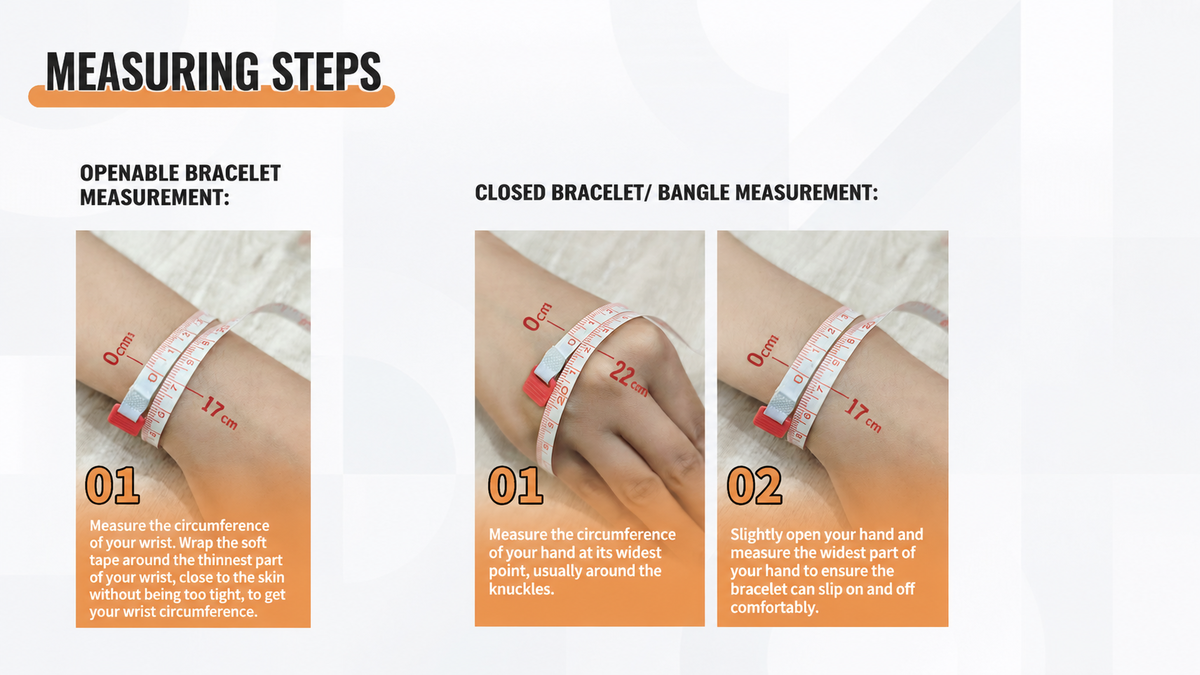
Bracelet sizing depends on the bracelet design.
Different styles require different measurement methods.
Open Bracelet and Clasp Bracelet Measurement
For bracelets with:
- Lobster clasps
- Spring rings
- Adjustable chains
Only wrist circumference is needed.
Measurement steps:
- Wrap a soft measuring tape around the smallest part of your wrist.
- Keep the tape comfortable without pulling too tightly.
- Record your wrist measurement.
For daily wear, add extra space depending on your preferred style:
- Tight fit: add 0.5 cm
- Comfortable fit: add 1 cm
- Relaxed fit: add 1-1.5 cm
Common Bracelet Size Reference
General wrist size guide:
- 14-15 cm: Small and delicate bracelets
- 15-16 cm: Standard everyday bracelet size
- 16 cm and above: Suitable for larger chains and statement jewelry
The correct bracelet size should feel secure while still allowing natural movement.
Necklace Length Guide: Choosing the Perfect Necklace Size
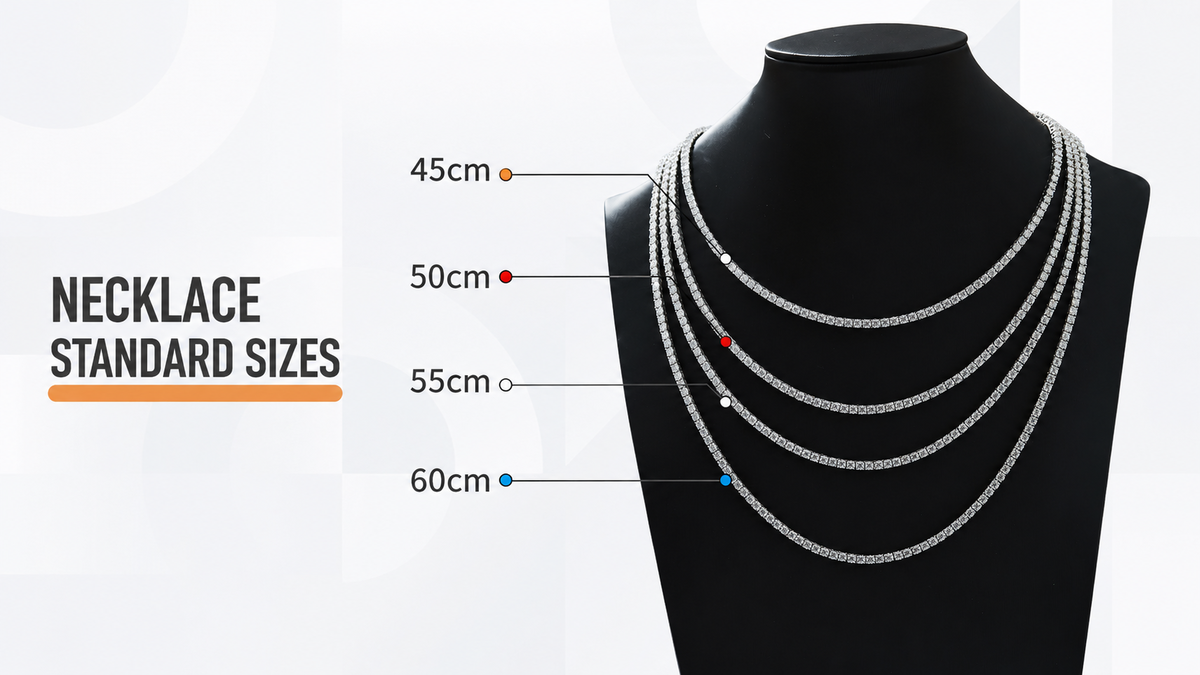
Unlike rings and bracelets, necklaces are mainly selected according to chain length rather than circumference.
Different necklace lengths create completely different styling effects.
Common Necklace Lengths and Styling Guide
35-40 cm: Choker and Collarbone Necklace
Features:
- Sits close to the neck
- Creates a delicate and elegant appearance
- Perfect for layering
Suitable for:
- Petite body types
- Simple daily outfits
- Open neckline styles
40-45 cm: Classic Everyday Necklace
This is the most popular necklace length.
Features:
- Falls around the collarbone area
- Matches most clothing styles
- Suitable for everyday wear
Ideal for:
- Office outfits
- Casual fashion
- Minimal jewelry styling
50 cm: Medium-Length Necklace
Features:
- Falls above the chest area
- Creates a more elegant silhouette
Suitable for:
- Sweaters
- High-neck clothing
- Layered jewelry combinations
55-60 cm: Long Necklace
Features:
- Creates a longer visual line
- Adds sophistication to outfits
Perfect for:
- Autumn and winter styling
- Layered necklace combinations
- Fashion-forward jewelry designs
How to Test Necklace Length Before Buying
If you are unsure about necklace length:
- Use a piece of string or thread.
- Place it around your neck.
- Adjust it to your preferred position.
- Measure the final length.
Final Thoughts
Finding the correct jewelry size is essential for comfort, durability, and overall appearance.
Whether purchasing a moissanite ring, gemstone bracelet, or custom jewelry piece, accurate measurement helps ensure a better wearing experience.
For online jewelry purchases, understanding basic sizing methods can prevent common mistakes and help customers confidently choose pieces that fit perfectly.
Looking for Custom Jewelry Manufacturing?
We specialize in high-quality moissanite jewelry, lab-grown diamond jewelry, and custom jewelry manufacturing.
With professional design capabilities, in-house production, low MOQ support, OEM and ODM services, we help global jewelry brands create customized collections with reliable quality and craftsmanship.
Contact us to develop your next jewelry collection.